
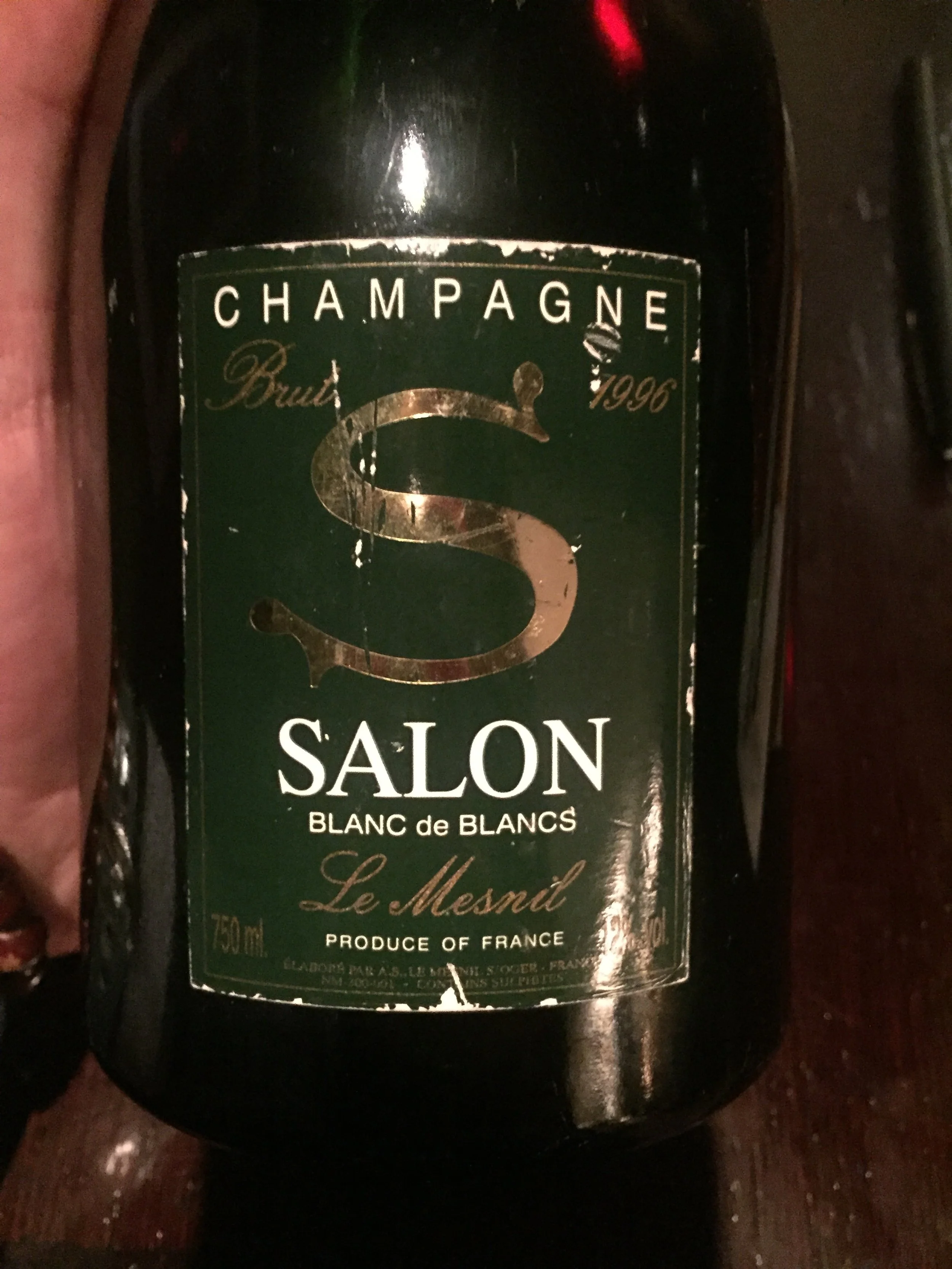
1996 in champagne. what happened?

by Edouard Bourgeois
November 21, 2025
Ratings for 1996 often use words like "exceptional" and "grandiose," with some comparisons to 1928. What made 1996 objectively unique was the high average potential alcohol (10.3%) combined with high total acidity (10g/litre)—figures rarely seen together. As Charles Philipponnat noted, this is a significant jump from the 9.3% potential alcohol common forty years prior.
Acidity and potential alcohol work together for balance, but typically, when one is high, the other is low. In 1996, both figures were high. Bruno Paillard called it a 'naughty boy' vintage due to its unpredictable nature and the anxiety it caused producers while waiting for acidity levels to drop. However, the result for those with patience is "fantastic."
While acidity is key for aging, the true test is time. Over two decades later, the remaining 1996 bottles reveal which producers succeeded. The best examples are still complex and alluring, where the high acidity is balanced by a wide range of aromas, from brioche to stone fruit. Unfortunately, some other bottlings show only residual acidity, resulting in unbalanced and tart wines.
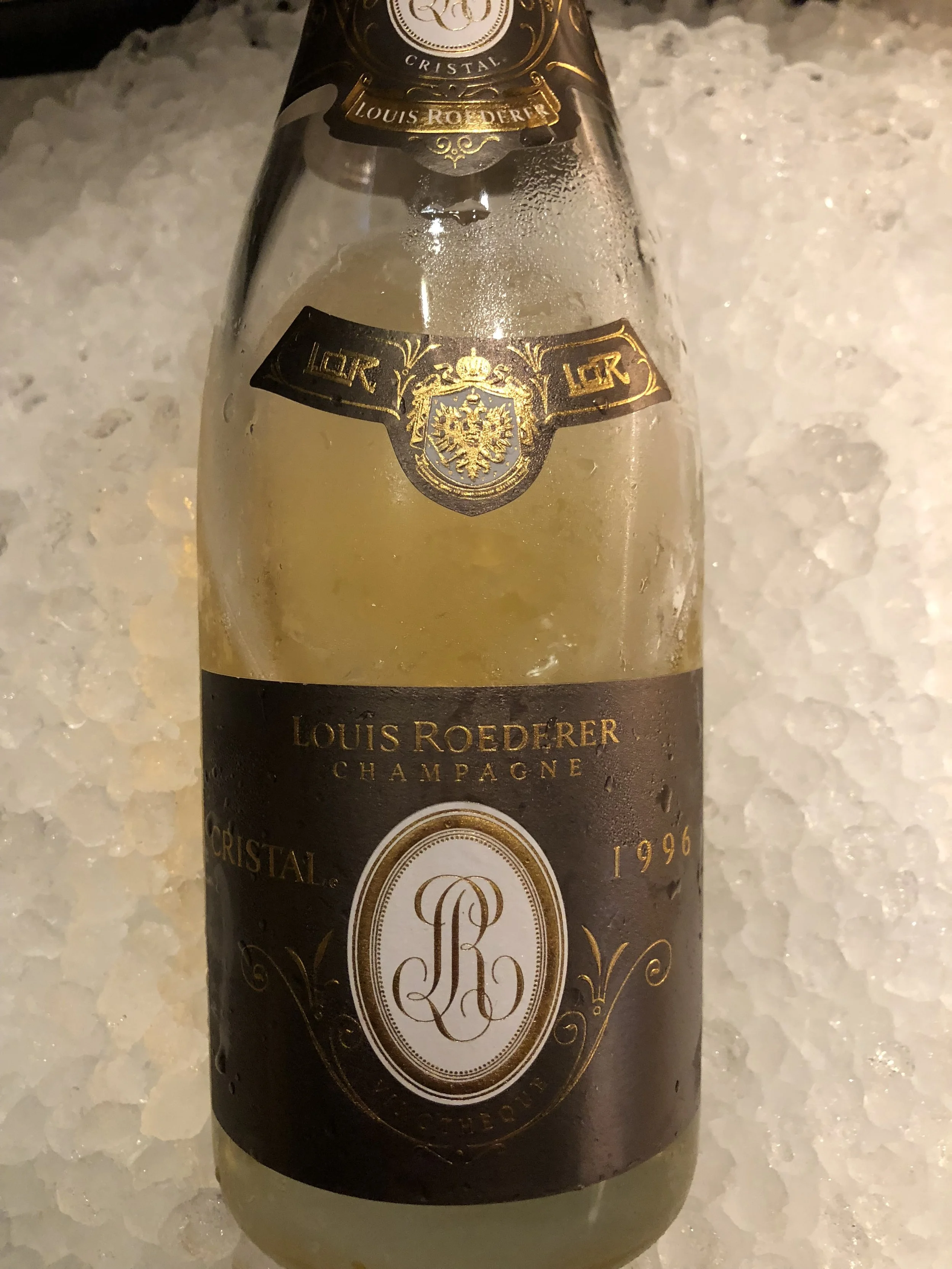
I recall opening a glorious bottle of 1996 Cristal for my son's birth seven years ago; the wine was still vibrant and charged.
Another fabulous example was made by Krug. As Olivier Krug said, "It’s a year where a good house or a good winemaker will make a good wine... It’s a tricky vintage." Other industry professionals have shared similar sentiments, noting that some vintners either opted out of making a vintage bottling or failed to achieve balance, resulting in wines that are already clumsy or tired.
The 1996 vintage often draws comparisons to its predecessor, 1995. These were the last two great Champagne vintages following the 1988, 1989, and 1990 trio. The 1996s are powerful wines; the best combine weight from ripeness with tension from acidity, providing the interest, complexity, and structure needed for long-term aging.
Interestingly, more houses released 1995 as a vintage Champagne than 1996, with a ratio of roughly 60% (1995) to 40% (1996).
Given its unpredictability, the safest bet for 1996 Champagne remains to go with producers you trust.
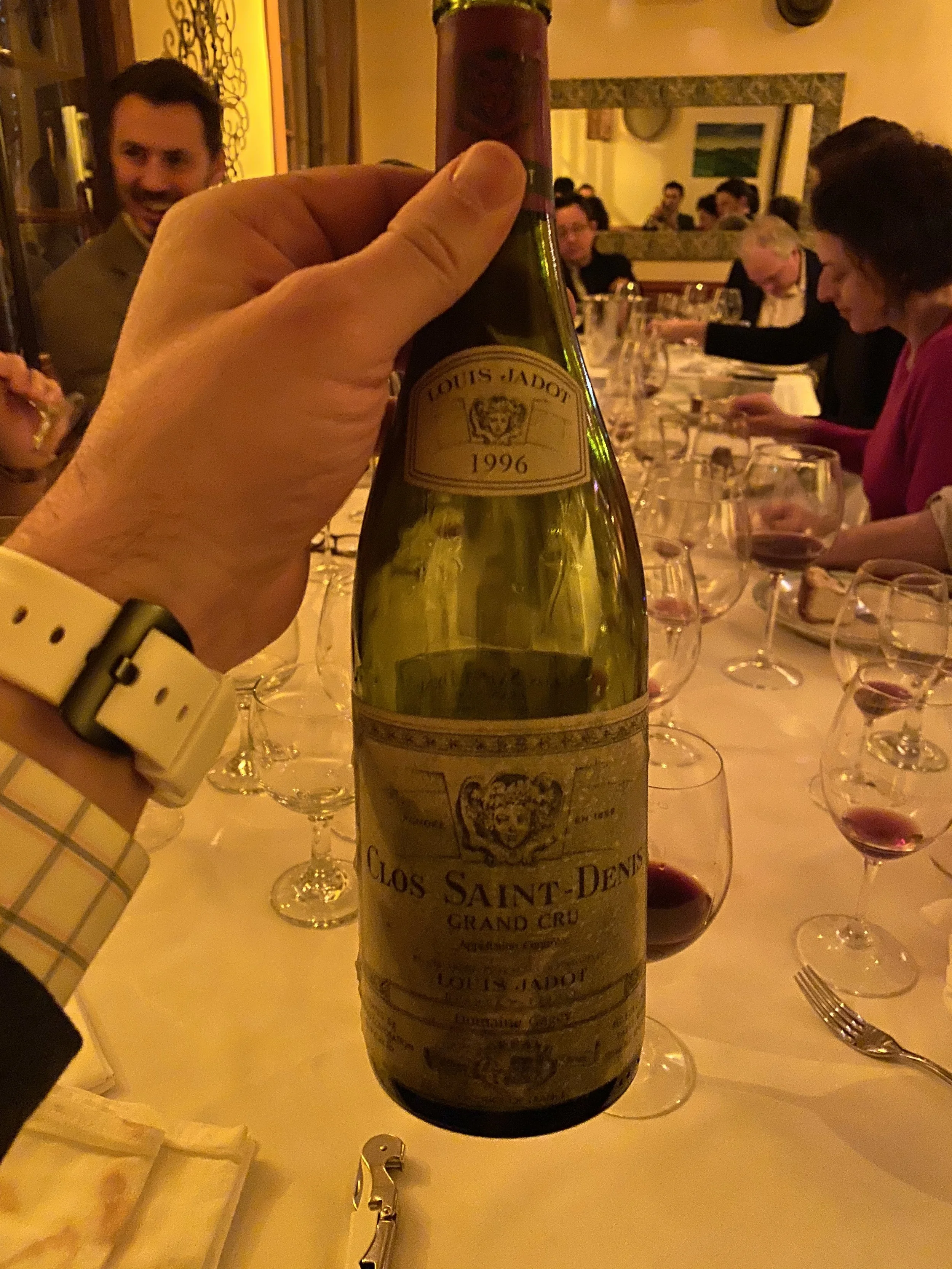
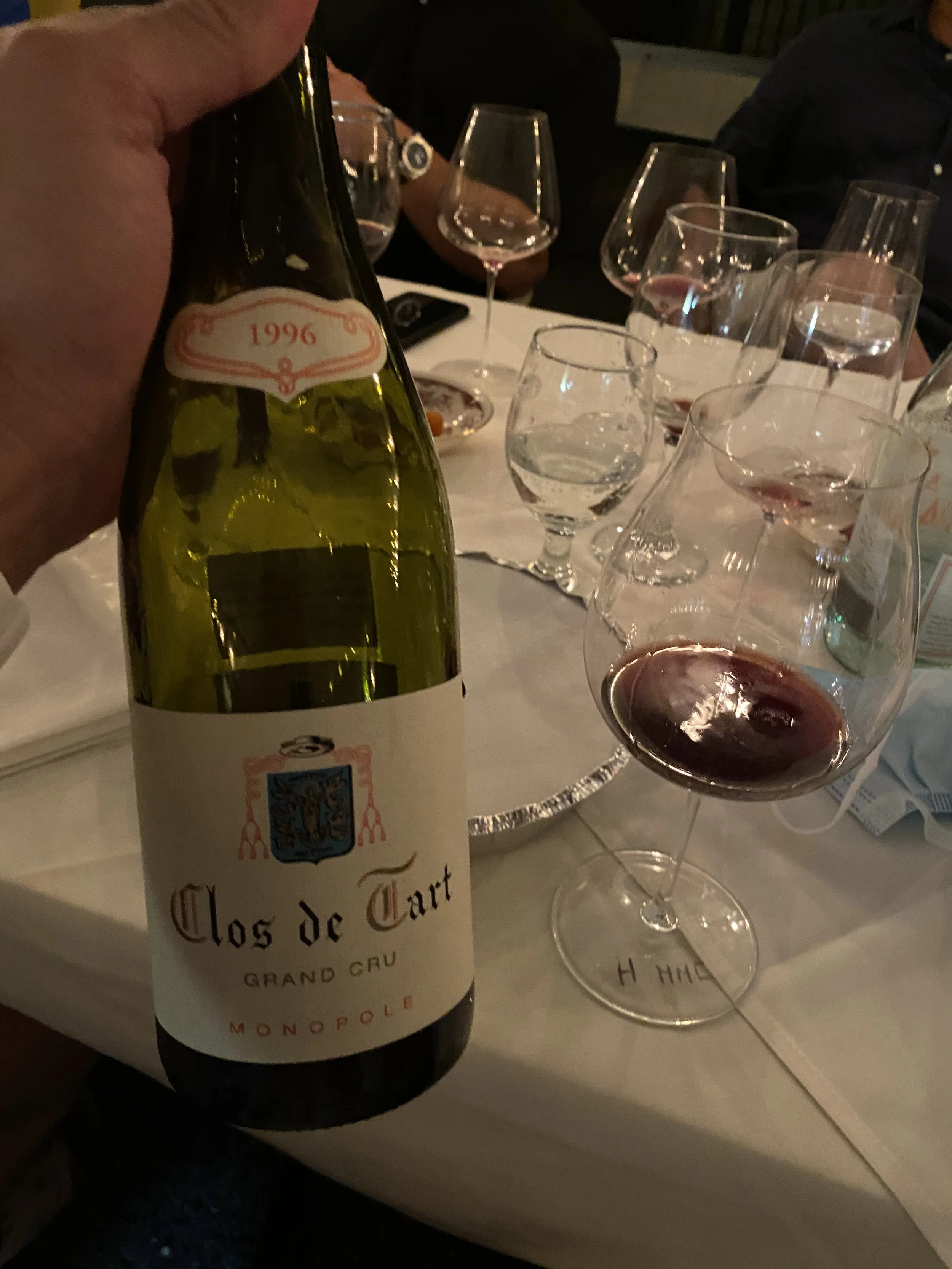
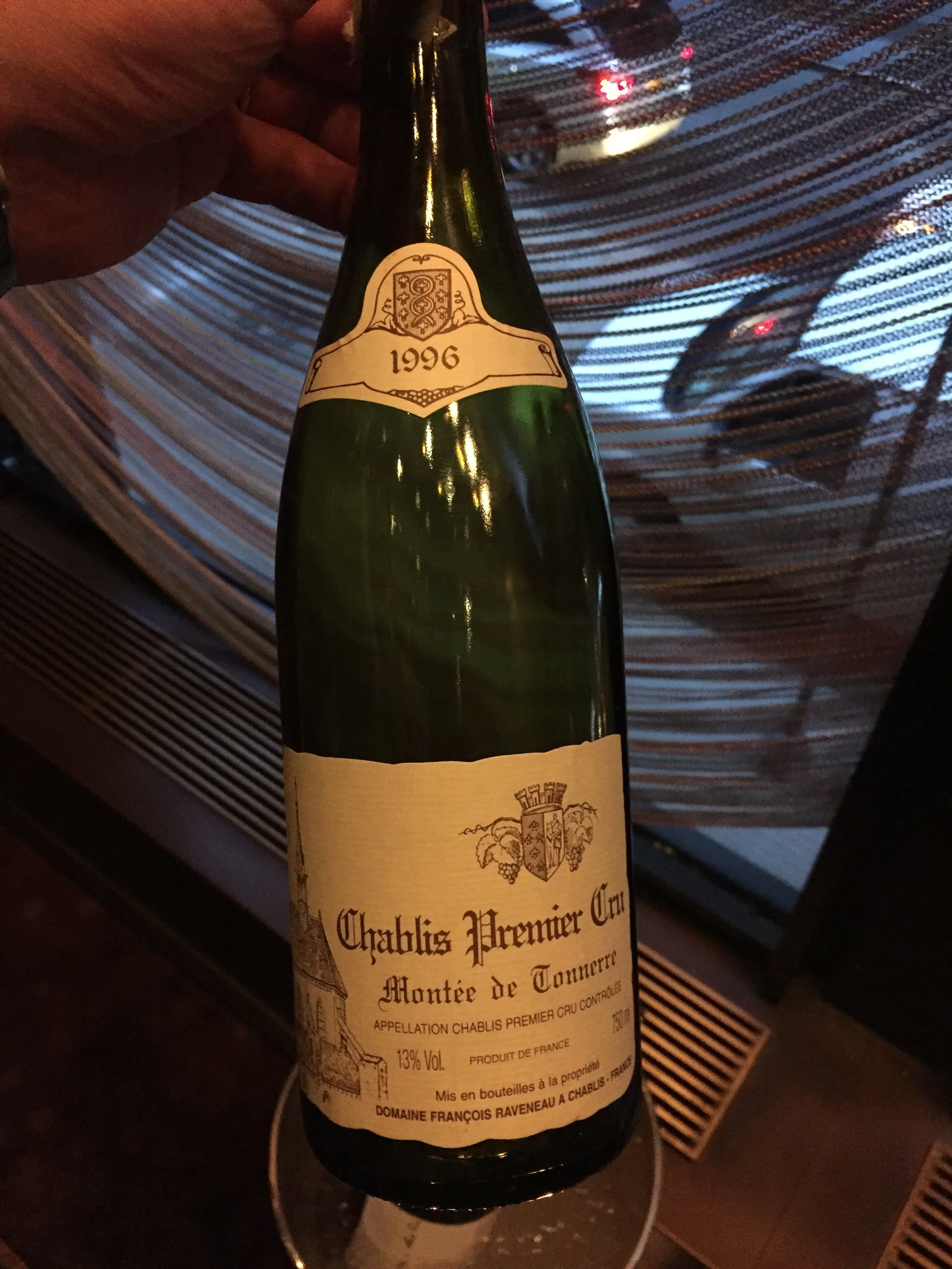
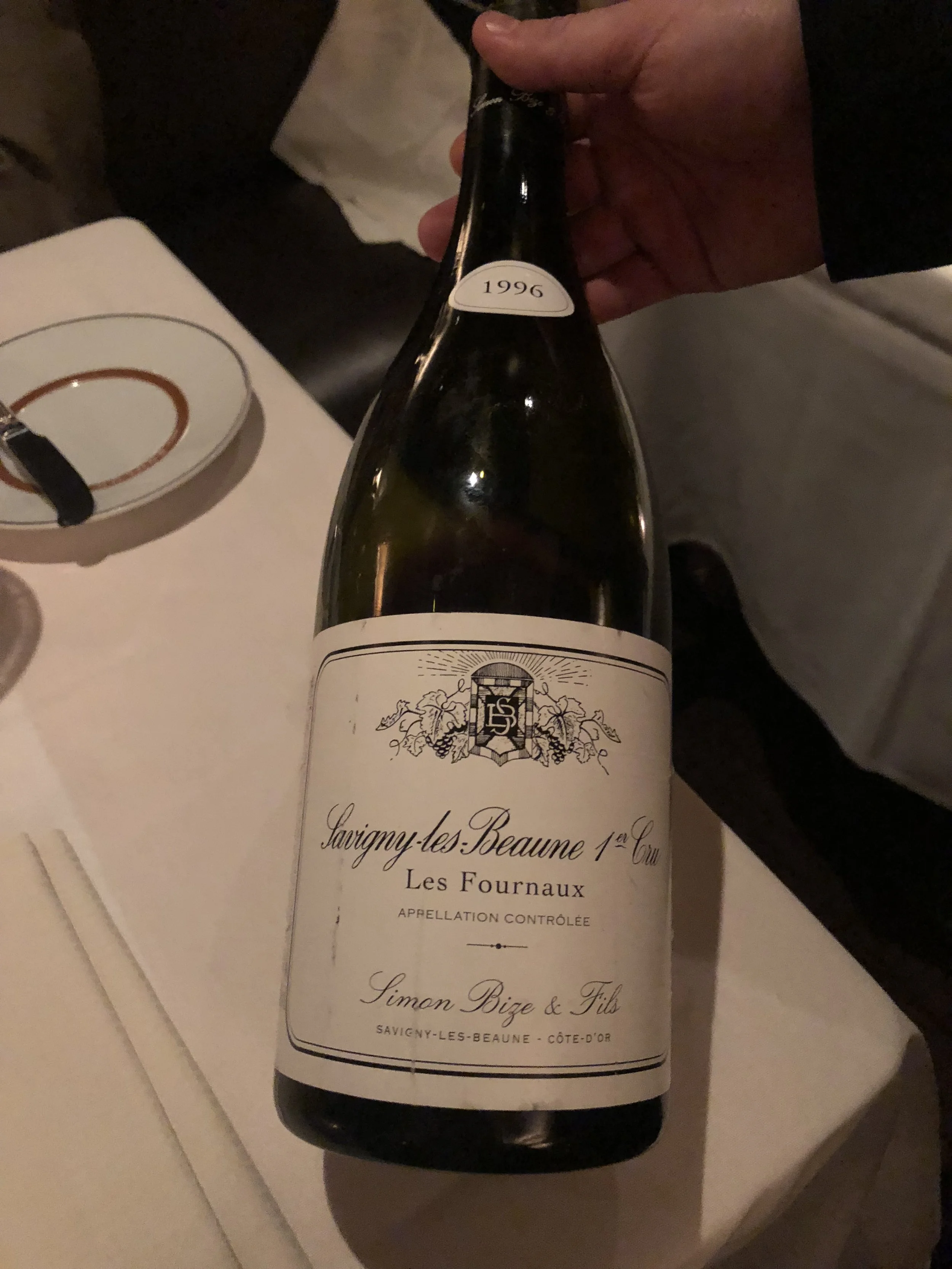
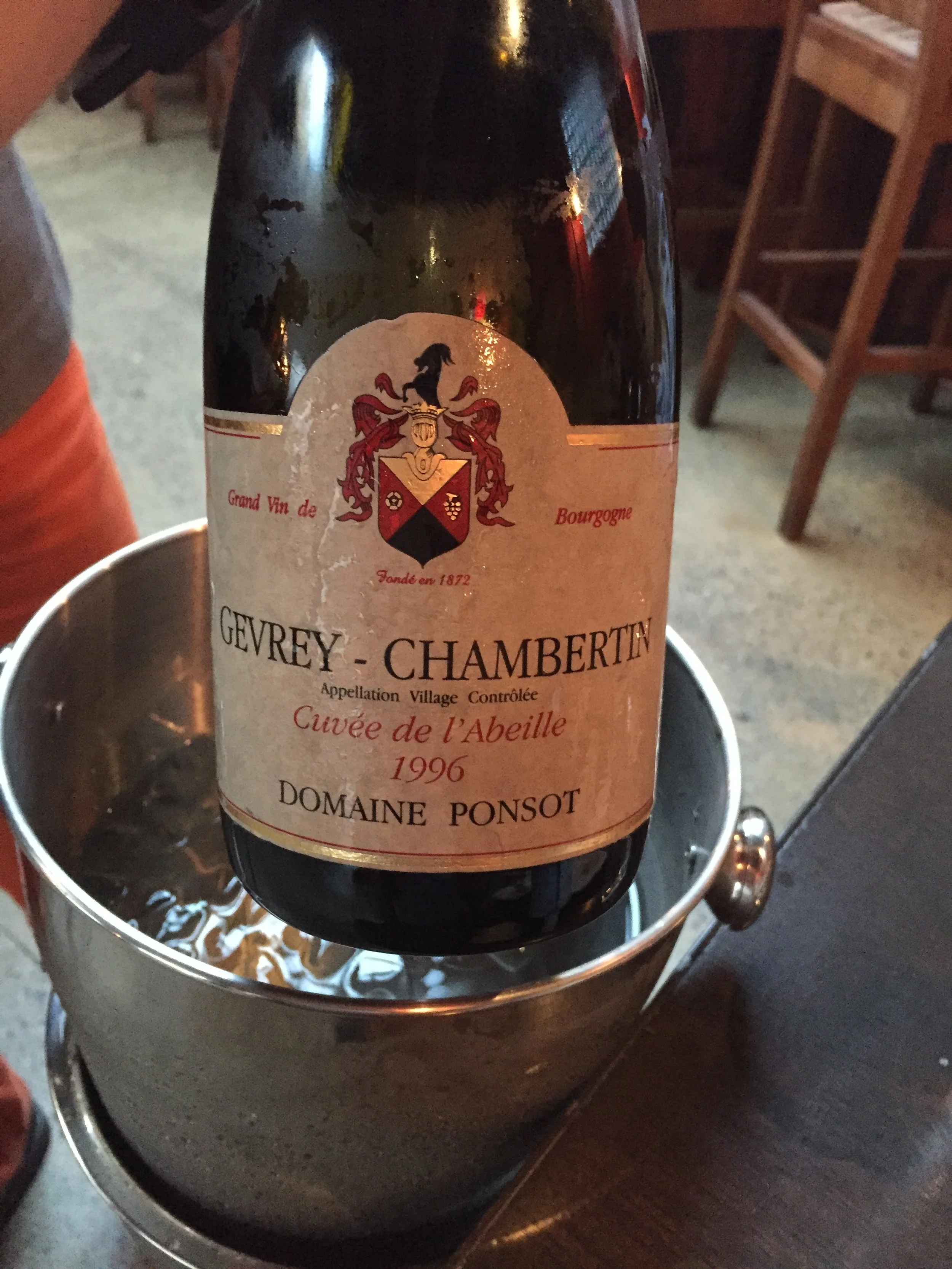
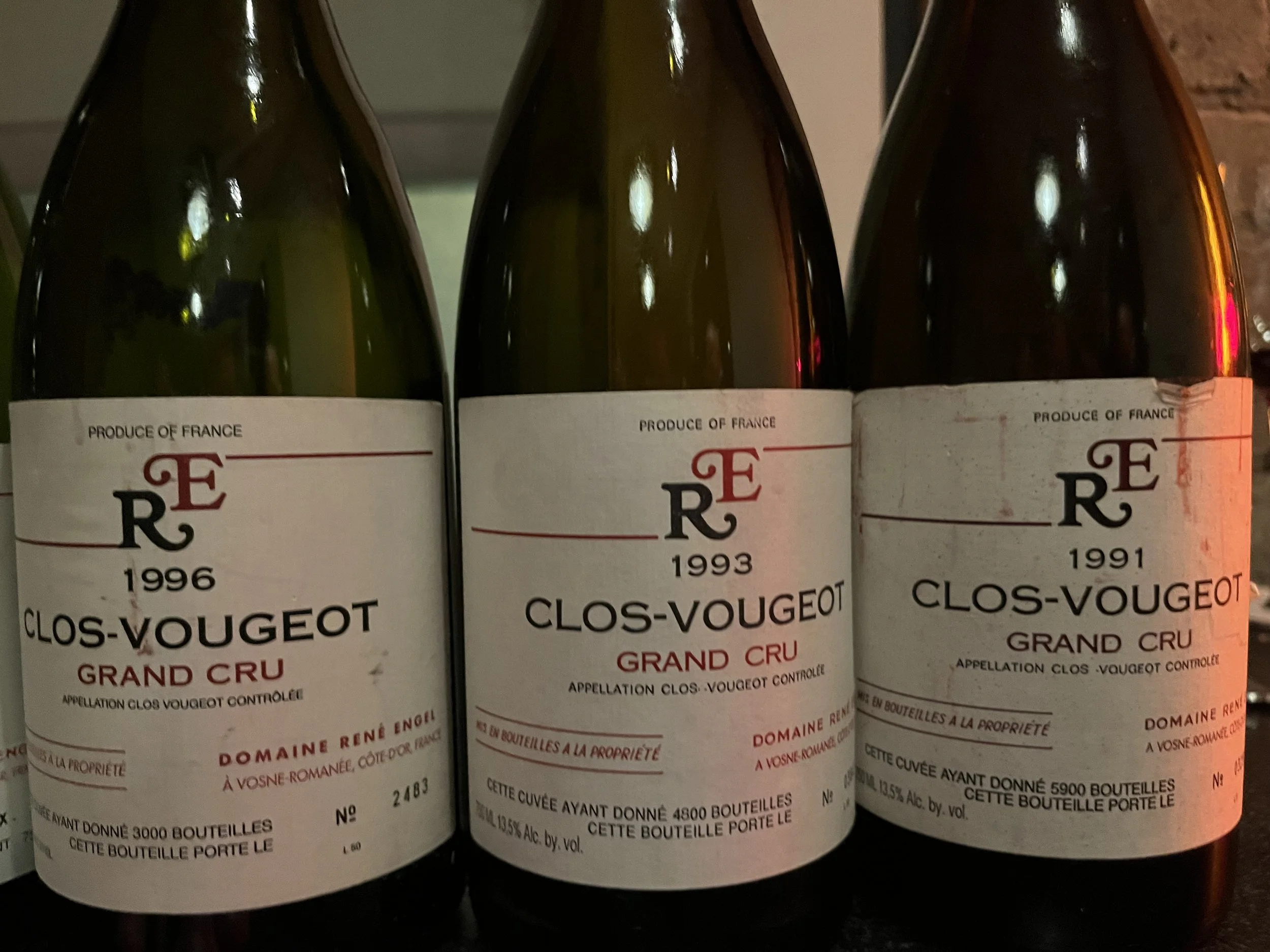
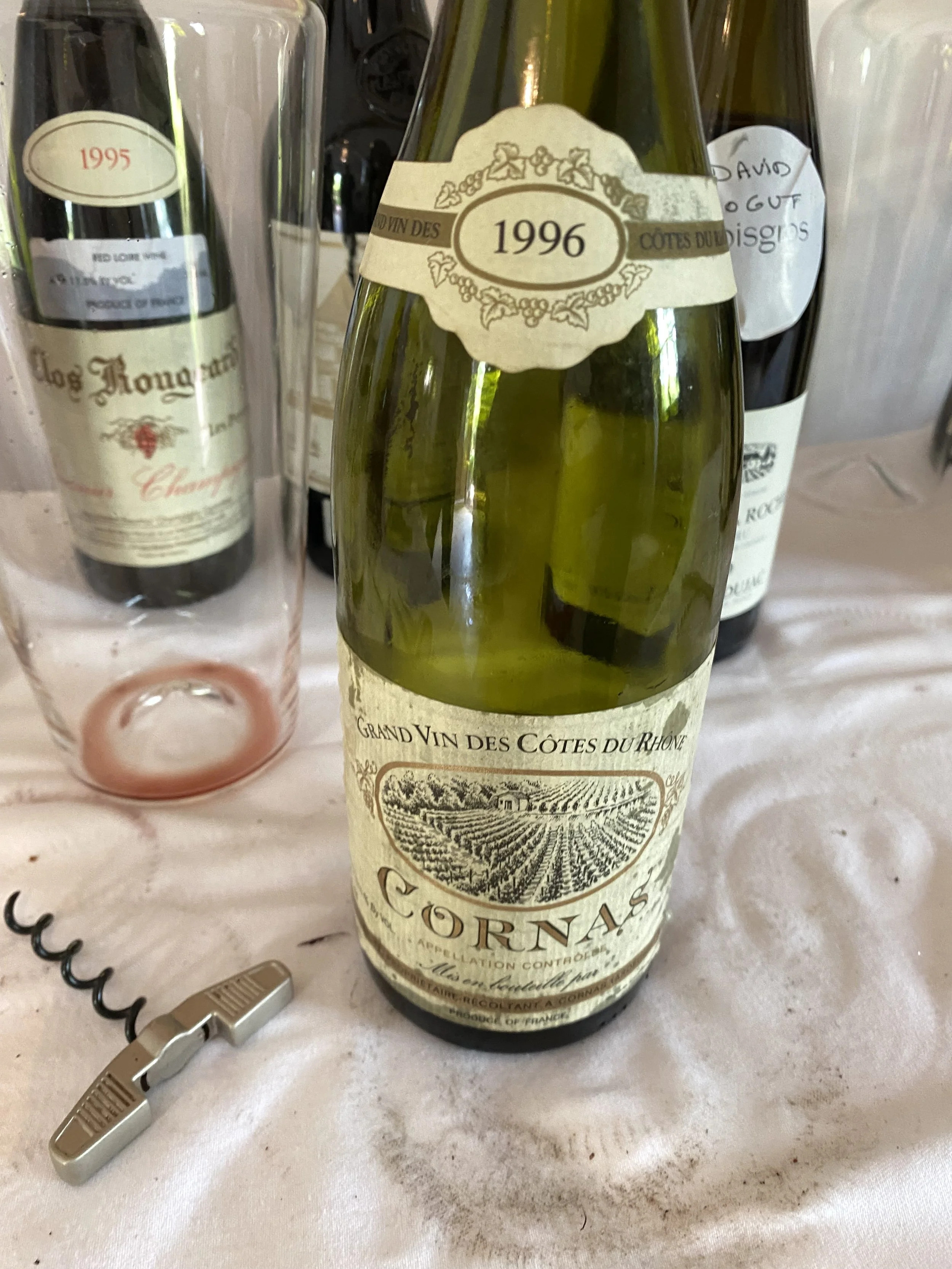
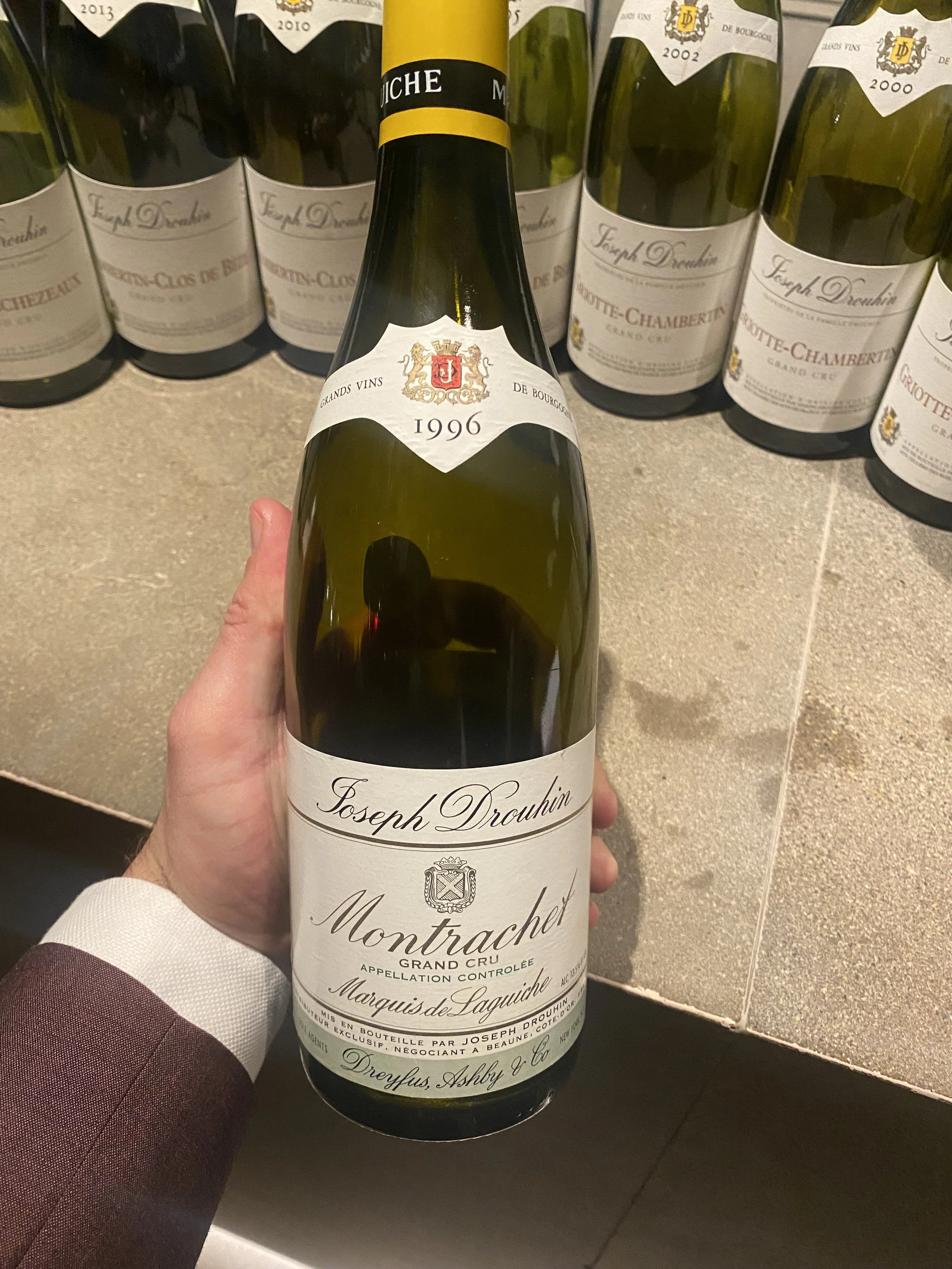
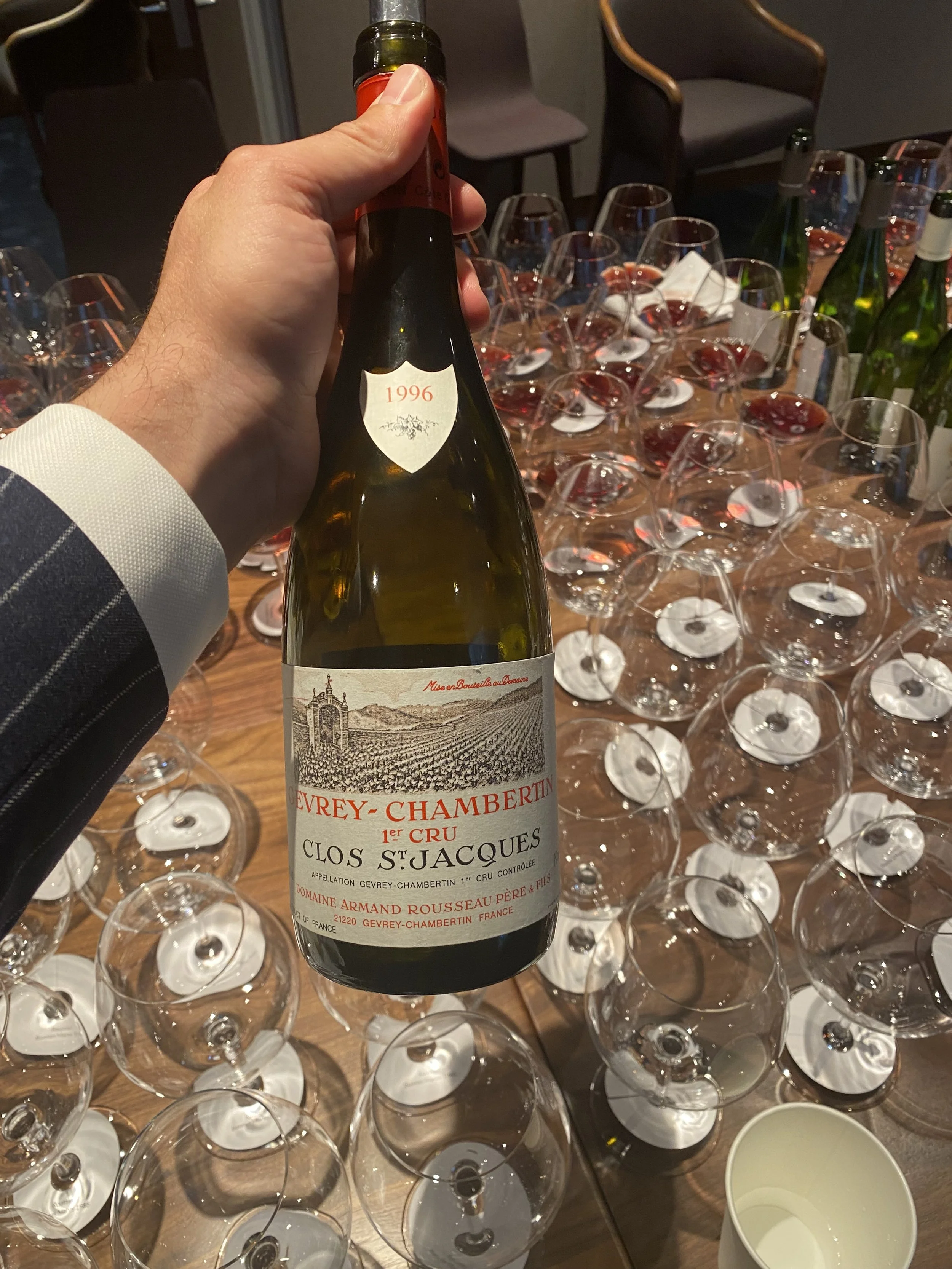
While looking for pictures of 1996 Champagne on my IPhone, I also found several other wines from various regions where the 1996 vintage truly shone, as seen in images below;jbgories



Pressoir Dinner - Gevrey Chambertin Recap
Pressoir Dinner - Gevrey Chambertin Recap
by Edouard
9/29/23
Gevrey Chambertin sits among the best appellations of the Cote de Nuits and its reputation as one of the most powerful wines from Burgundy is undeniable.
We had the privilege to taste twelve wines from this glorious appellation on September 14th at the delicious neighborhood restaurant Hearth. All four producers featured during the dinner were shining brightly!
I am pleased to share my tasting notes below:

FIRST FLIGHT:
We kicked things off with three vintages of Domaine Faiveley’s Gevrey-Chambertin Cazetiers. This 1er Cru climat is ideally located near the Combe de Lavaux where the star vineyard of Clos Saint-Jacques lives. But more on that later… Cazetiers was already ranked as Tete de Cuvee back in 1855 when Dr. Lavalle came up with his own ranking system. The name Cazetiers originates from the word “castel”, an indication of the proximity of the Chateau de Gevrey. Domaine Faiveley proudly owns half of the climat and this is certainly one of their most renowned wines. A varying proportion of whole cluster gets included during the winemaking.
The 2017 was really nice. The pretty fruit and juicy acidity were delightful. It was really compelling to taste the 2019 next to it. Much darker fruit was detected in this warmer vintage and I really enjoyed its grandiose character. An intense wine. The last one, 2016, fell a bit short I found. I couldn’t get past the dustiness on the nose and I found the balance to be a bit off with sharp tannins. Aeration did help but it was not the star of the flight for me.
SECOND FLIGHT:
Domaine Denis Mortet is an institution in Burgundy. Denis’ mentor was none other than the mythical figure of Henri Jayer. Denis worked with his father in the mid 1980’s until he founded his own eponymous domaine in 1991. His son Arnaud has been working at the winery since 1999 and took over the reins after his father passed away in 2006. Arnaud did reduce the proportion of new wood during the elevage and one of the particularities of the winemaking is the laborious removal of the main stem in the grapes, a way to “half destem” essentially.
The flight was comprised of three vintages of Lavaux Saint Jacques. The vineyard is close to Cazetiers but closer to the Combe, which makes it a cooler site as the Combe brings cold air. This climatic situation prolongates the ripening of the grapes. 2015 showed a massive personality. Even if the alcohol felt high, it was nicely balanced with fragrant sweet cherry and no shortage of glycerol. A concentrated wine that really embodies the style of the vintage where millerandage (a natural phenomenon that causes berries to remain small, thus concentrating the level of skin in the juice). 2014 was a different story. If 2015 is sometimes described as an ideal vintage, the previous year threw a few curve balls with too much rain being one of them. However, Mortet did really well and the wine was delightfully elegant and complex. A much lighter wine than 2015. The real surprise for me was met with the 2013. Not always the best performer, the vintage showed beautifully here. The fruit quality was gorgeous, and it was my favorite wine of the flight!
THIRD FLIGHT:
Domaine Bruno Clair was founded after the dissolution of the iconic and now extremely hard to find Domaine Clair-Daü. Today, Bruno Clair and his two sons manage a jaw-dropping twenty-seven hectare estate with vineyards in the most notorious villages of the Cote de Nuits, Aloxe-Corton, Vosne-Romanée, Chambolle Musigny, Morey Saint Denis and of course, Gevrey-Chambertin. Here we tasted the highly anticipated Clos Saint Jacques from three distinct vintages. In fact, only two of them, as the 2012 was unfortunately corked. However, 2013 was perfectly sound and performed quite well. Still young, the tannic structure remained a bit firm. Clos Saint Jacques is also known for its power and perfectly embodies the style of Gevrey as a big wine. The generous inclusion of whole cluster at Bruno Clair brought freshness and the complexity of this exceptional terroir shone nicely. 2005 showed its age quite a bit with secondary aromas of forest floor and mushroom. The texture was quite nice and very soft with a reminder of the warm season in 2005, illustrated by generous, jammy fruit notes suggesting figs. We replaced the corked bottle with a really nice 2012 Gevrey-Chambertin from Philippe Rossignol. A great wine that managed to find its place as a village level wine next to the main performer, that is Clos Saint Jacques.
FOURTH FLIGHT:
Finally, after a focus on 1ers Crus, we closed the dinner with three pristine Chambertin Grand Cru from Domaine Trapet. The historical, family-owned winery has been managed by seven generations of Trapets and marked the winekaing history of Burgundy when they illegally grafted their vines onto American rootstocks to fight the invasion of the phylloxera at the end of the XIXth century. This practice obviously became not only legal but the only recognized solution to save the Burgundian vineyards against the devastating bug. Pioneers in biodynamic farming, Trapet is an example of ultra ecological farming. Generous with whole cluster, the wines at Trapet are not the most powerful in the region. Rather light and elegant even with these Grand Cru bottlings, they were nonetheless intense and full of life with a certain vibration. 2017 expressed small red fruits and tart cherries. 2012 offered a superb nose of spice mix and pepper. A certain rusticity on the palate gave it an authentic character. The last wine, a 1999, was gorgeous. Still youthful and beautifully textured, it impressed with a long finish and layers of irresistible aromas ranging from violet to damp earth and red berries.
